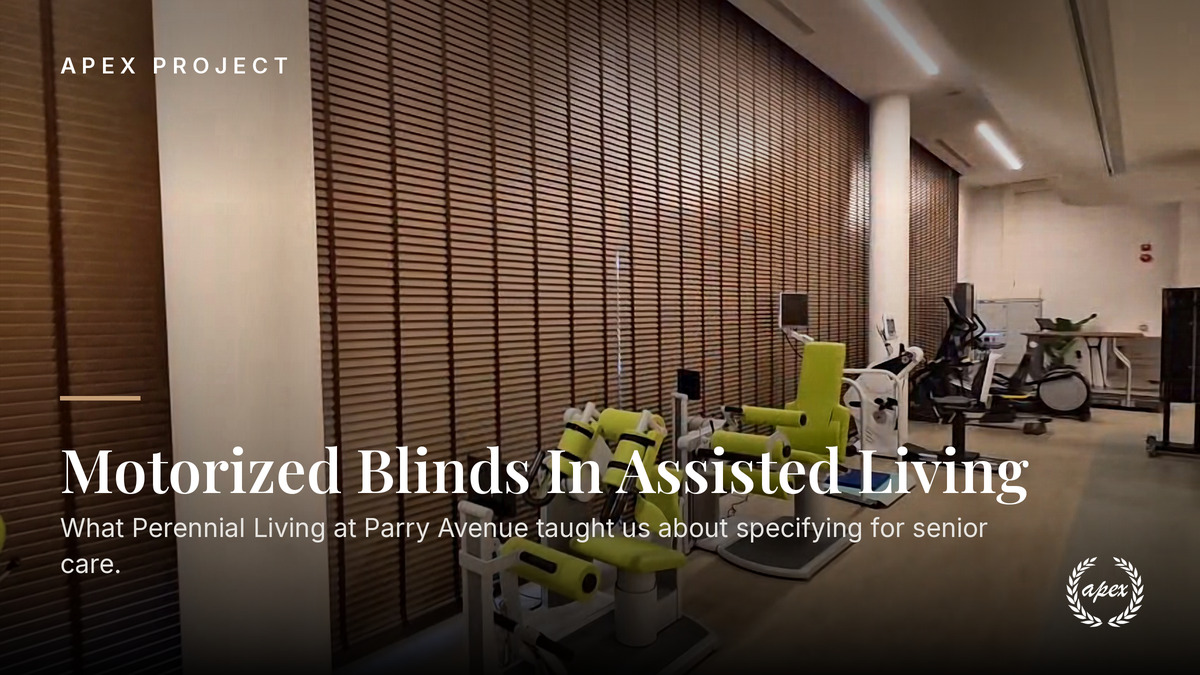
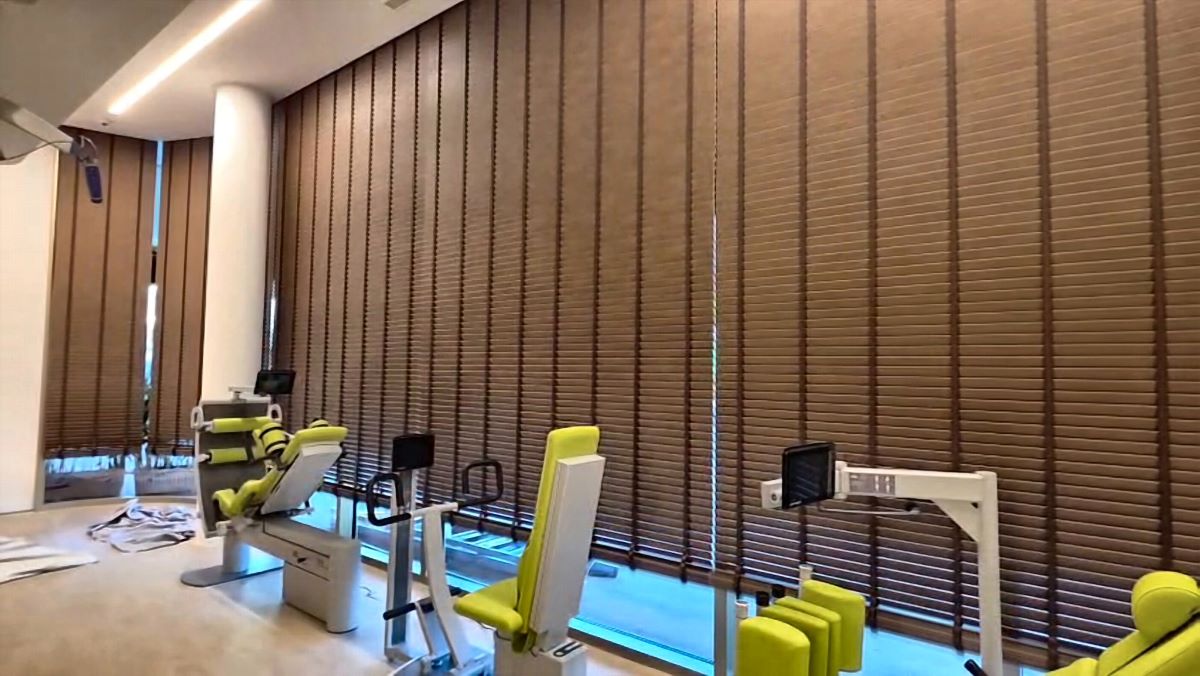
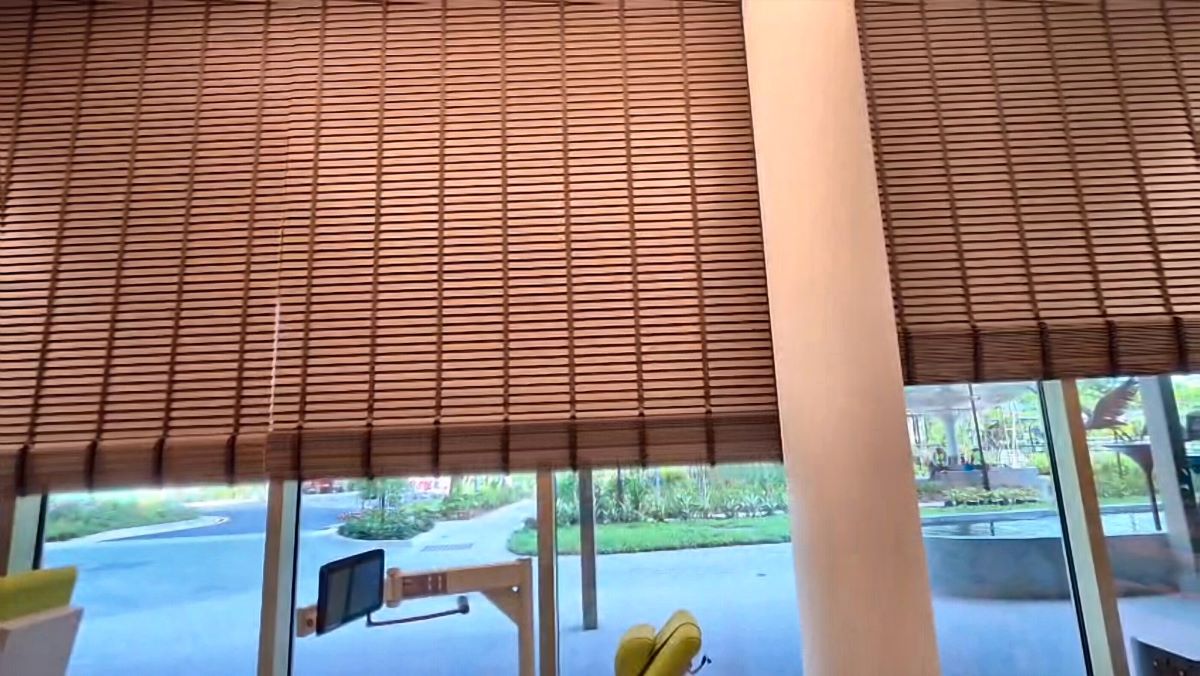
Singapore’s first private assisted living development opened at Parry Avenue on 18 August 2026. Apex supplied the window coverings across the project.
Working on it changed how we think about motorized blinds. In a condominium, a blind manages light and privacy. In assisted living it also manages sleep, falls, orientation and dignity. Those are not decorative problems, and the specification that solves them looks very different from a residential order. Here is what we learnt.
The Brief Was A Home, Not A Ward
CNA’s write-up made the design intent clear: the apartments are meant to read as private homes rather than clinical rooms. That is a harder brief than it sounds.
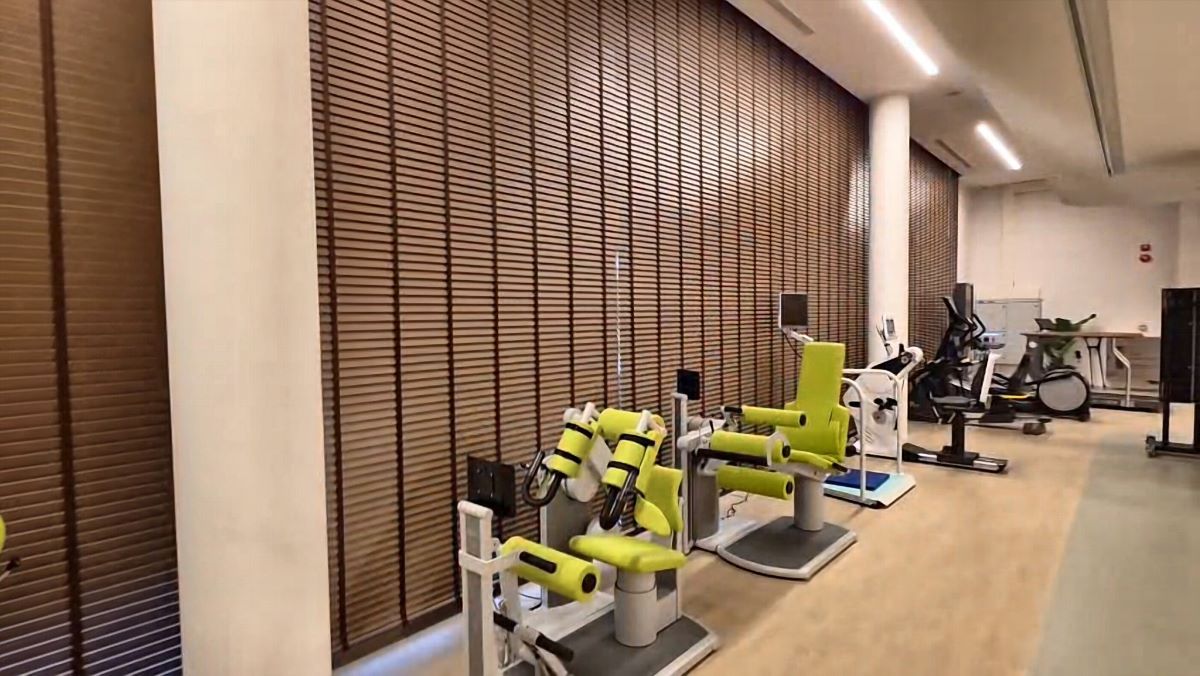
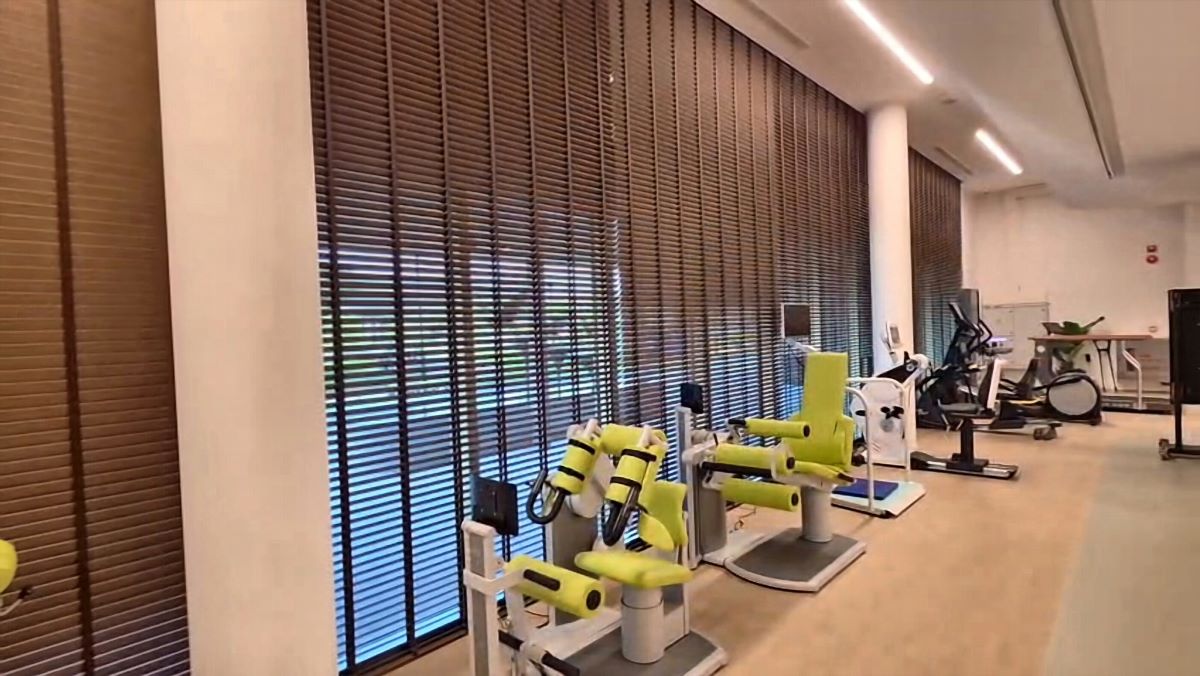
The apartments run 302 to 569 sq ft with floor-to-ceiling glazing. Generous with daylight, and generous with glare. In a residence for seniors that trade-off is not cosmetic. Older eyes scatter more light, and cataracts, reduced contrast sensitivity and slower adaptation between bright and dim areas are all common past 70. Unmanaged glare off a polished floor can stop a resident crossing a room.
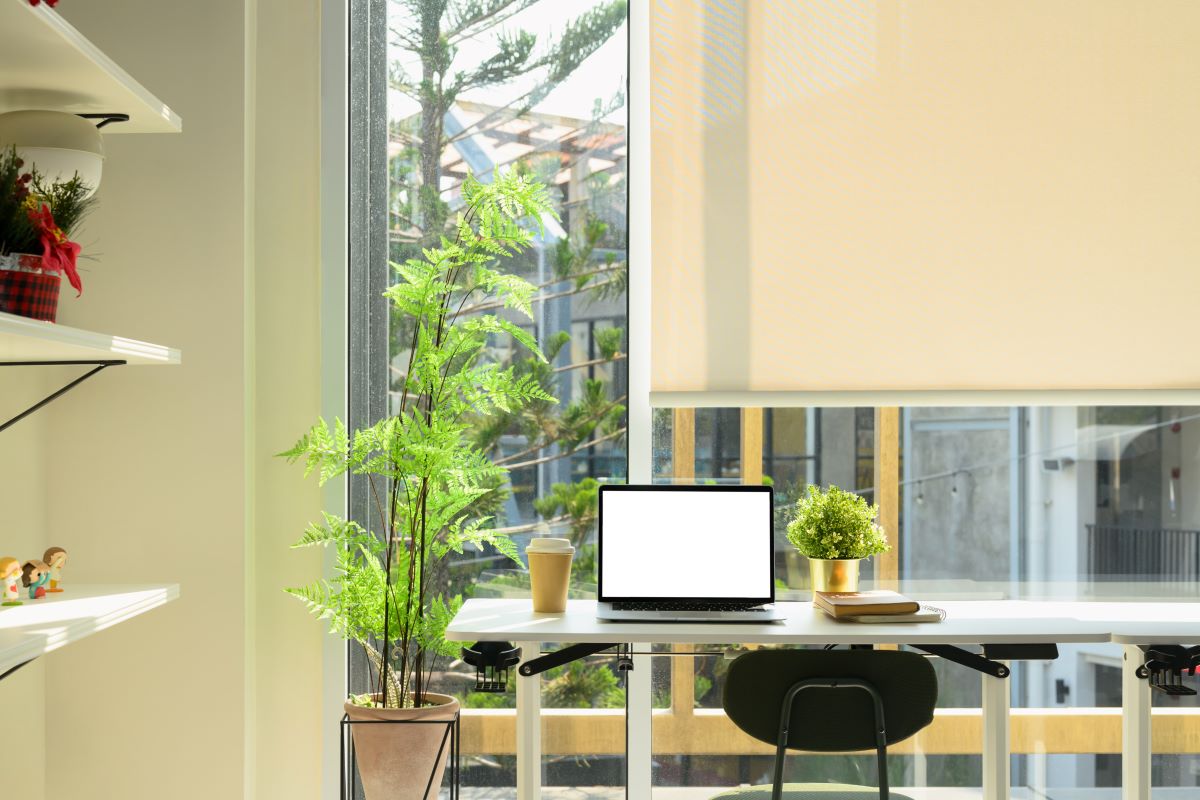
So the first job of the window coverings was not decoration. It was even, diffused daylight without hot spots, which is why solar shade fabrics matter more here than the product type does.
Why Dementia Care Changes The Specification
Two blocks totalling 40 units are dedicated to residents with mild to moderate dementia, and roughly 30 per cent of nursing suite beds are set aside for severe dementia. Four principles drive the specification there:
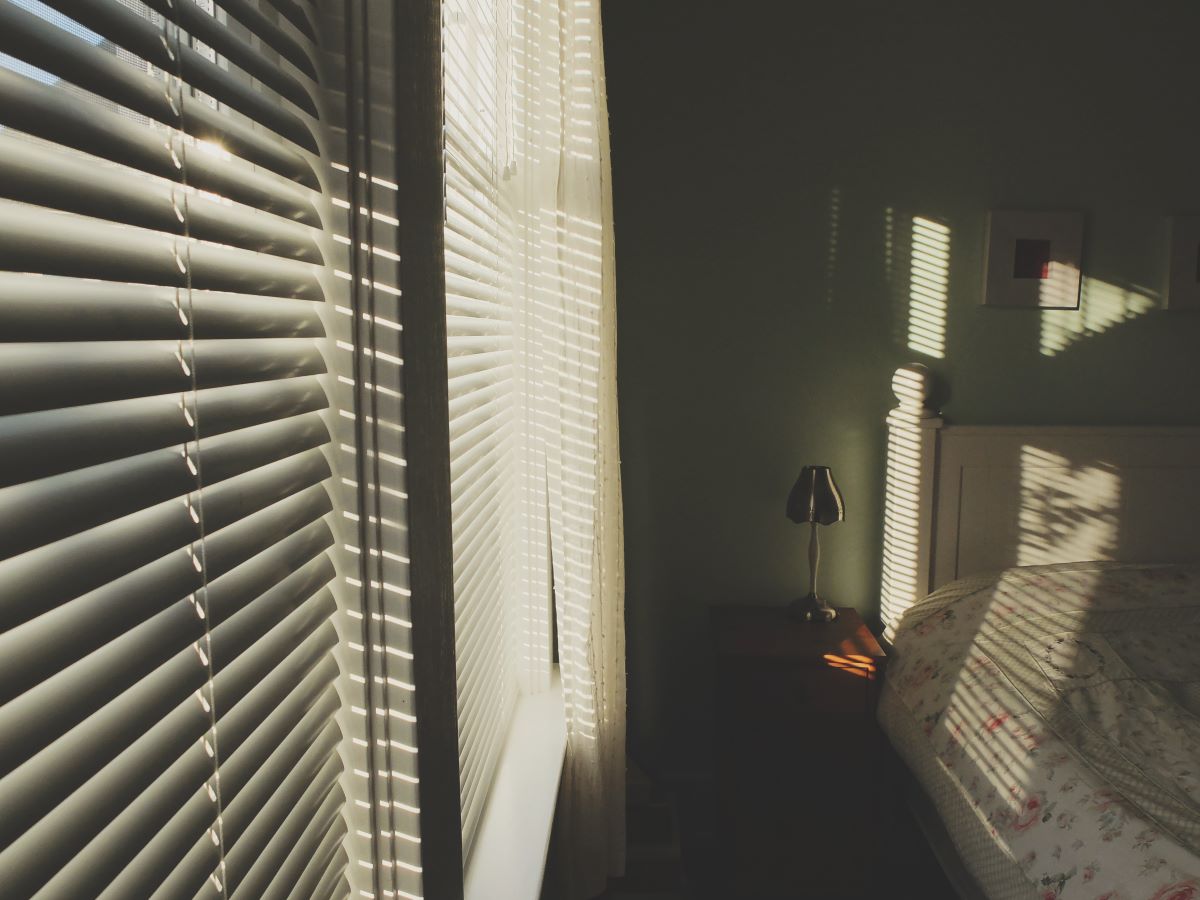
- Shadows read as objects. A hard-edged shadow can be perceived as a step or a hole, causing hesitation or refusal to walk. Soft, uniform light removes those false cues.
- Contrast helps, but only where you want it. High contrast between track, wall and floor aids depth perception. High contrast within a floor plane does the opposite.
- Daylight anchors the body clock. Bright days and genuinely dark bedrooms help regulate circadian rhythm, which is linked to sundowning and night wandering. Blackout blinds are a clinical feature here, not a luxury.
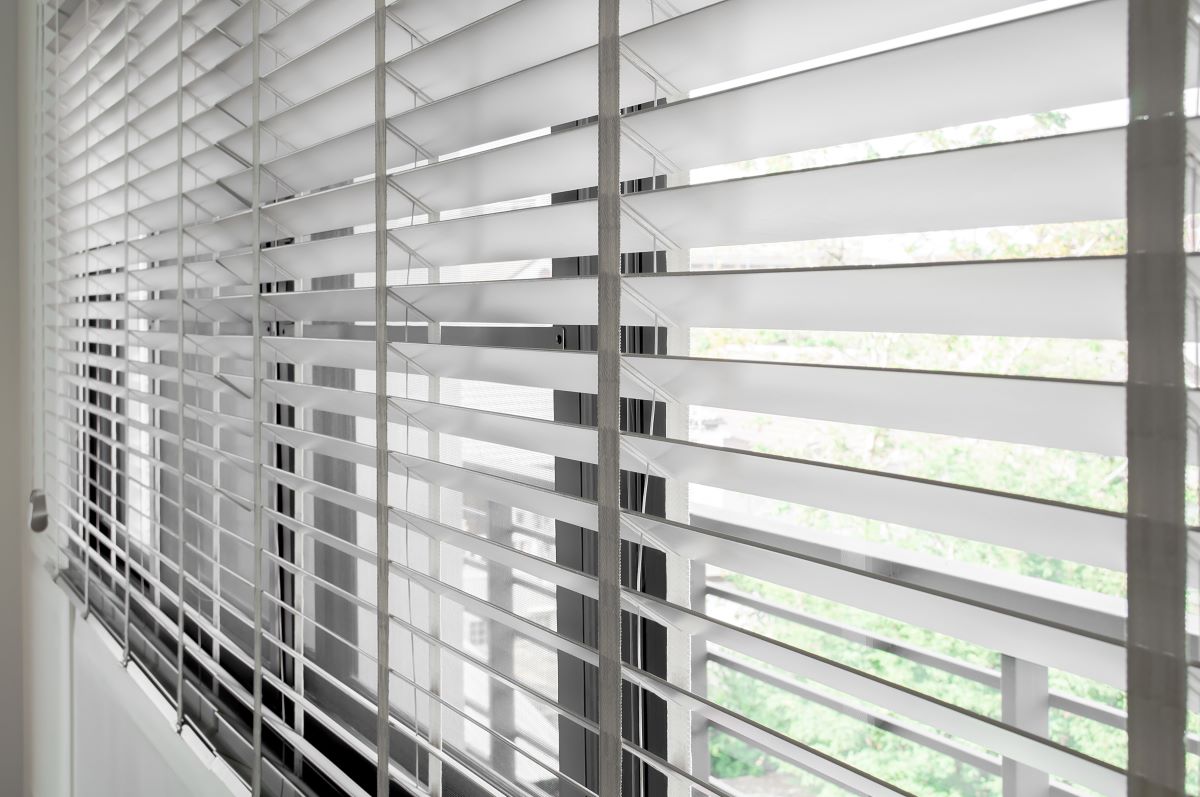
- Nothing dangling. Looped cords and chains are a hazard around anyone who may pull or become entangled. The cord-free thinking architects already apply to child safety applies just as directly at the other end of life.
What We Specify Differently In Senior Living
| Requirement | Why it matters | What we specify |
| Reach and grip | Wheelchair users cannot reach a wand at 2.8m; arthritis makes chains unusable | Motorized blinds, remote or scheduled |
| Glare | Older eyes scatter light; hot spots stop movement | Light-filtering fabric, chosen openness factor |
| Sleep and rest | Naps and night rest need real darkness | A second blackout blinds layer |
| Safety | Cords are an entanglement and fall risk | Fully cordless throughout |
| Cleaning regime | Care settings clean often and aggressively | Wipe-down, stain and moisture resistant finishes |
| Fire compliance | Institutional buildings carry requirements | Certification documented before installation |
Motorisation deserves its own note. The apartments already carry fall detection, motion-sensor lighting, emergency call systems and vital-sign monitoring. Motorized blinds belong in that same stack. They are accessibility equipment, not a gadget, and where a building runs smart blinds on a scheduler, that scheduling matters as much as the remote. A blind that opens at seven and closes at dusk gives a resident daylight rhythm without anyone having to ask for help.
Where The Requirements Change Across A Building
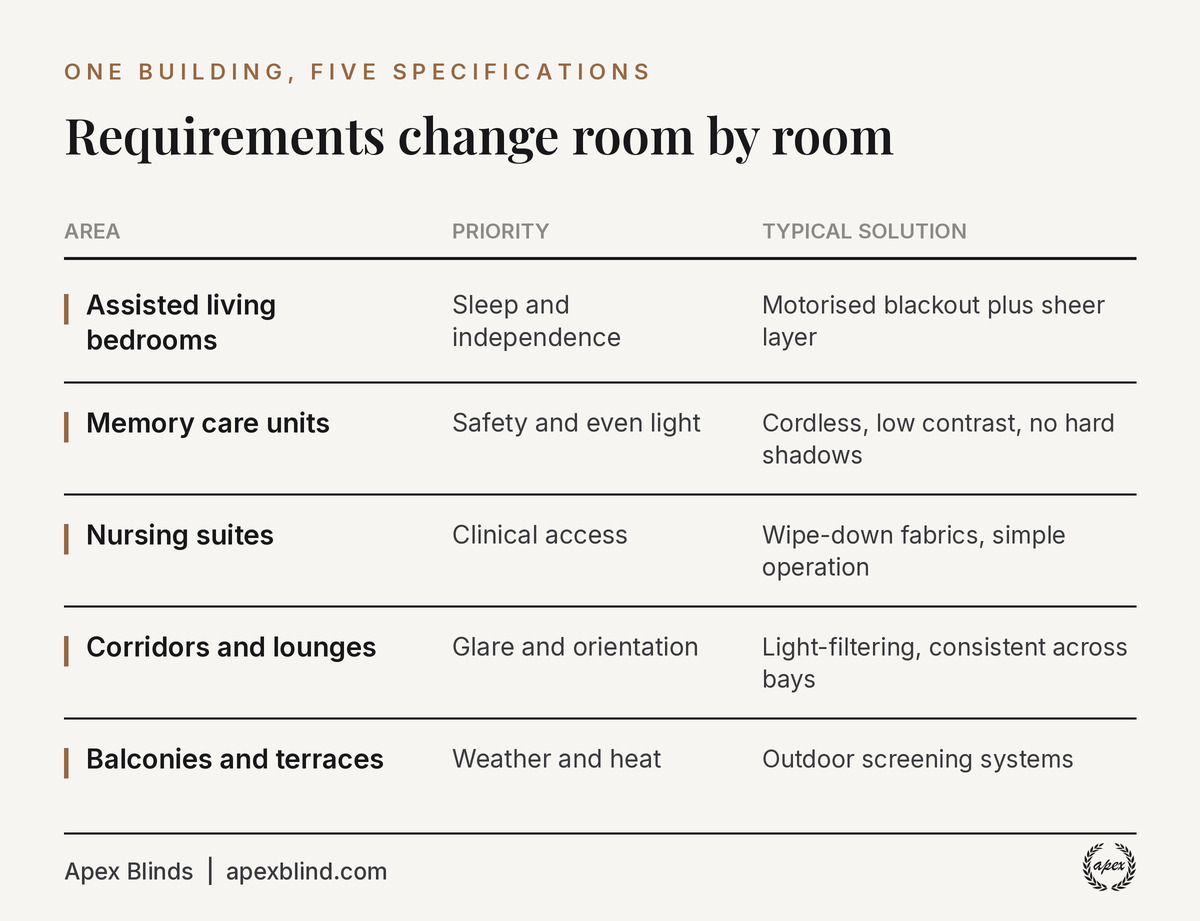
One specification does not cover a whole development. The same building asks for different things room by room.
| Area | Priority | Typical solution |
| Assisted living bedrooms | Sleep and independence | Motorized blackout blinds plus sheer layer |
| Memory care units | Safety and even light | Cordless, low-contrast, no hard shadows |
| Nursing suites | Clinical access and cleaning | Wipe-down fabrics, simple operation |
| Corridors and lounges | Glare and orientation | Light-filtering, consistent across bays |
| Balconies and terraces | Weather and heat | Outdoor screening systems |
Getting this wrong is expensive in a way homeowners never experience. A fabric that suits a bedroom can be actively unsafe in a memory care unit.
Serviceability Across Hundreds Of Units
Every unit is a custom blinds order sized to its own opening, so hundreds of installations have to stay consistent and remain repairable years from now. Standardised componentry, available spares and a clear maintenance plan matter more than any design flourish. A facility cannot have a resident sitting in glare for three weeks waiting on a discontinued part.
This is also where fabric quality decides the real cost. In a home, a fabric that fades is annoying. Across a development it becomes a replacement programme. The same applies to motors: motorized blinds are only as good as the service arrangement behind them, which is why we publish ours rather than leaving it to a conversation at handover.
The Same Thinking Works At Home
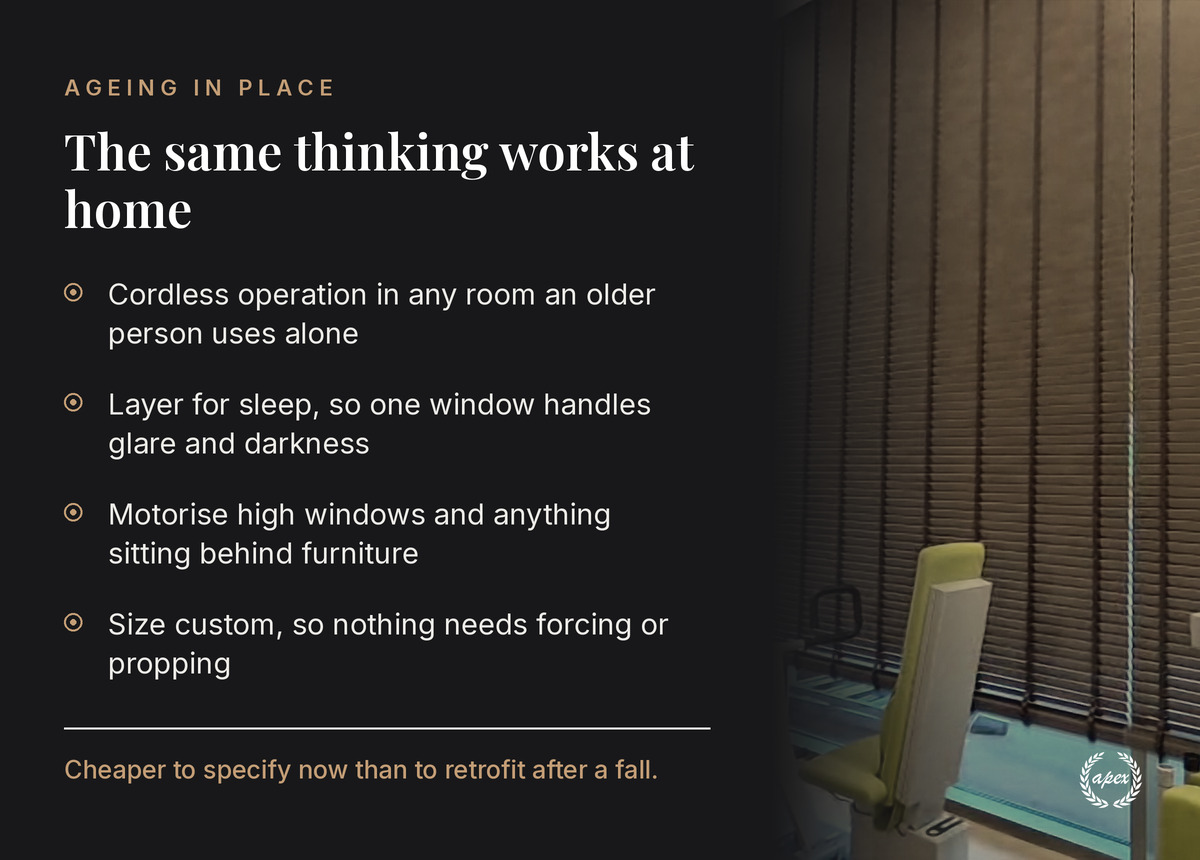
Most people will never live in a development like this. But Singapore is ageing, and the same decisions apply when a parent moves in or a family plans to stay put.
Cordless operation in any room an older person uses alone. Layering for better sleep so one window handles both afternoon glare and a proper night’s rest. Motorized blinds or smart blinds on high windows and anything behind furniture. Custom blinds sized properly, so nothing needs forcing or propping.
None of it is expensive on a single room. All of it makes a house easier to grow old in, and it is far cheaper to specify now than to retrofit after a fall.
Common Questions About Senior-Friendly Window Coverings
Are motorized blinds worth it for an elderly parent at home?
Usually yes, on windows they cannot easily reach. The value is independence rather than convenience. Scheduling also means the blinds still operate on days they forget.
What makes a blind dementia-friendly?
No cords or chains, fabrics that diffuse light rather than casting hard shadows, and blackout capability in bedrooms to support sleep and reduce night wandering.
Can existing blinds be motorised, or do they need replacing?
Some can be converted to motorized blinds depending on the mechanism and tube size. We will tell you honestly which of yours are worth converting and which are not.
Planning A Senior-Friendly Space?
Whether it is a development, a care facility, or ageing-in-place upgrades to a family home, we will walk you through glare control, blackout, motorisation and fabric selection, and what each costs. Developers and interior designers can talk to us about project work directly. Get in touch and we will bring samples.
Project figures reported by Vanessa Lim, CNA, 18 August 2026:
https://www.facebook.com/100064391875569/posts/1505239768299071/?rdid=824uUuphOShXYjea#